

1"x3" or 26x78mm Polycrystalline Solar Cell with 1BB
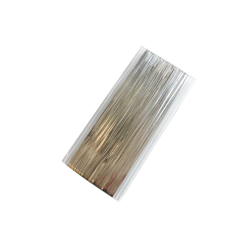
26x78 mm (1x3 inch) polycrystalline solar cell rated about 0.35 Wp with 1 busbar. Nominal values: Vmp 0.544 V, Imp 0.70 A, Voc 0.64 V and 18.7% efficiency.
A narrow format for micro modules, sensors, models, prototypes and STEM labs. This is a bare cell and requires ribbon, soldering, support and encapsulation.
The 26x78 mm 1BB polycrystalline solar cell produces approximately 0.35 Wp in a narrow format for micro modules, sensors, models and solar-powered prototypes. At maximum power it supplies a nominal 0.544 V and 0.70 A.
It is not a complete panel. Module construction requires ribbon compatible with the single busbar, controlled soldering, support, insulation and encapsulation against moisture and impact.
Why choose a narrow 26x78 mm cell?
The 26 mm width suits elongated surfaces and confined spaces where larger cells will not fit. Its moderate current is useful for small circuits, experiments and strings containing many elements.
For repairs, geometry, technology, current, busbar and electrical data must match. A different format may create mismatch even when nominal voltage is similar.
SC1P1-26x78 technical specifications
| Reference | SC1P1-26x78 |
| Technology | Polycrystalline silicon |
| Rated power Pmax | About 0.35 Wp |
| Vmp | 0.544 V |
| Imp | 0.70 A |
| Voc | 0.64 V |
| Isc | 0.82 A |
| Efficiency | 18.7% |
| Busbar | 1BB |
| Dimensions | 26x78 mm, about 1x3 inches |
| Thickness | 170 ± 20 µm |
| Weight | About 3 g |
What do 12, 24 or 36 cells produce?
Series connection adds voltage while current remains about 0.70 A. Values are theoretical before temperature, mismatch, soldering and encapsulation losses.
| Cells | Vmp | Voc | Approximate power |
| 12 | 6.53 V | 7.68 V | 4.2 Wp |
| 24 | 13.06 V | 15.36 V | 8.4 Wp |
| 36 | 19.58 V | 23.04 V | 12.6 Wp |
Choose the cell count from the voltage required by the device or controller. To increase current, connect only complete matched strings in parallel.
STEM projects and educational photovoltaic kits
The narrow format supports experiments on active area, voltage, current and selective shading. It is useful for small vehicles, fans, sensors and demonstrators with multiple cells in series.
Discover The Sun in the Classroom and MR WATT educational photovoltaic kits
How to solder the 1BB cell
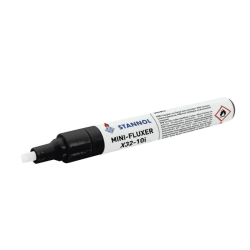
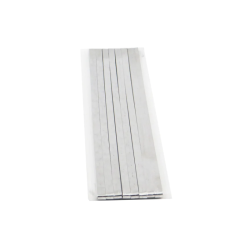
Use compatible ribbon and flux, a clean tip, controlled temperature and short contact times. Do not bend or press the cell. Check continuity, polarity and voltage after every string.
Read the MR WATT solar-cell soldering guide
Frequently asked questions
Is this a complete photovoltaic panel?
No. It is one approximately 0.35 Wp cell requiring interconnections, support, insulation and encapsulation.
Can it power a sensor directly?
It depends on the required voltage and current. One cell supplies about 0.544 V nominally, so multiple cells, storage or a converter are often required.
How many cells provide about 6 V?
Twelve cells in series provide approximately 6.53 V nominal Vmp before losses and changing light or temperature.
Is it suitable for models and laboratories?
Yes. The narrow format suits small vehicles, sensors, demonstrators and series/parallel tests.
Can it be used outdoors without protection?
No. It must be encapsulated and protected from moisture, impact and bending.