



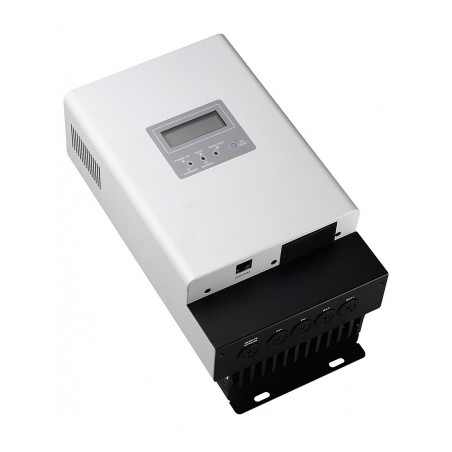

Voltronic SCC-MPPT-3KW 60A Charge Controller 12/24/48V
Voltronic Power SCC-MPPT-3KW 60A MPPT solar charge controller for 12/24/48V battery banks, with PV open-circuit voltage up to 145V and maximum array power of 800W, 1600W or 3200W according to battery voltage.
Multifunction LCD, three-stage charging, maximum efficiency of 98% and declared compatibility with sealed lead-acid, AGM and GEL batteries. IP31 enclosure.
The Voltronic Power SCC-MPPT-3KW is a 60A MPPT charge controller designed for 12V, 24V or 48V off-grid battery systems. It supports up to 800W of PV at 12V, 1600W at 24V and 3200W at 48V, with a declared maximum efficiency of 98%.
The multifunction LCD shows solar power, battery voltage and capacity, charging current, load information and fault conditions. Charging is performed in three stages — bulk, absorption and float — for sealed lead-acid, AGM and GEL batteries.
Why choose a 60A, 145V MPPT controller?
This model is intended for larger autonomous systems than common 20A, 30A or 40A controllers. A 48V battery bank allows up to 3.2kW of PV while reducing battery-side cable current compared with an equivalent 12V design.
The PV input operates over an MPPT range of 60-115VDC and accepts a maximum open-circuit voltage of 145VDC. The array must therefore contain enough modules in series to reach at least 60V in operation, while never exceeding 145V Voc under the coldest expected conditions.
Voltronic SCC-MPPT-3KW technical specifications
| Reference | SCC-MPPT-3KW |
| Technology | MPPT |
| Maximum charging current | 60A |
| Rated battery voltages | 12/24/48VDC |
| Maximum PV power at 12V | 800W |
| Maximum PV power at 24V | 1600W |
| Maximum PV power at 48V | 3200W |
| MPPT operating range | 60-115VDC |
| Maximum PV open-circuit voltage | 145VDC |
| Maximum PV input current | 50A |
| Maximum efficiency | 98% |
| Charging method | Three stages: bulk, absorption and float |
| Declared battery compatibility | Sealed lead-acid, AGM, GEL |
| Display | Multifunction LCD |
| Temperature compensation | Battery temperature sensor BTS |
| Operating temperature | 0°C to +55°C |
| Operating humidity | 5-95%, non-condensing |
| Altitude | Up to 3000m |
| Protection rating | IP31 |
| Dimensions | 315 x 165 x 128mm |
| Net weight | 4.5kg |
How to size the solar array correctly
Array voltage is the first item to check. The sum of panel Vmp values in series must fall inside the 60-115V operating range. The temperature-corrected sum of Voc values must remain below 145V.
A single nominal 12V panel, or one modern module with Vmp around 30-40V, is not enough to reach the 60V minimum. In many systems at least two or three modules in series will be required, but the exact number depends on Vmp, Voc and the panel temperature coefficient. It cannot be selected from wattage alone.
The maximum PV power changes with battery voltage: 800W at 12V, 1600W at 24V and 3200W at 48V. These power ratings do not permit exceeding the input voltage or current limits.
Battery compatibility: important lithium warning
The official SCC-MPPT-3KW documentation lists sealed lead-acid, AGM and GEL batteries. It does not specify a dedicated LiFePO4 or other lithium charging profile.
Do not connect a lithium battery without written manufacturer confirmation, a genuinely compatible charging profile and verification of the BMS requirements. A 60A controller can damage a battery rapidly when voltage, current and temperature limits are incorrect.
LCD, charging and protection functions
The LCD displays solar power, battery voltage and capacity, charging current, load level and fault conditions. The BTS sensor provides temperature compensation for lead-acid charging voltage.
Protection functions include overload, battery overcharge and reverse polarity on both PV and battery sides. Overload protection operates above 110% with an audible warning, but external fuses, isolators and correctly rated protection devices are still essential.
Installation and ventilation
The IP31 enclosure is not suitable for direct exposure to rain or spray. Install the unit vertically in a clean, dry and ventilated location with clearance for heat dissipation. The declared operating temperature starts at 0°C, so it is not suitable for locations that may remain below freezing while in service.
Battery-side cables may carry up to 60A and must be sized for length, voltage drop and applicable electrical rules. Fit a suitable protective device close to the battery positive terminal.
Typical applications
- Residential off-grid solar systems at 24V or 48V.
- Cabins, farms, workshops and remote buildings.
- Telecommunications and remote monitoring equipment.
- PV arrays up to 3.2kW with a 48V battery bank.
- Professional lead-acid systems requiring an LCD and temperature compensation.
Frequently asked questions
Can I connect 3.2kW of panels to a 12V battery?
No. The 3200W rating applies to a 48V battery bank. The limits are 800W at 12V and 1600W at 24V.
Can I connect only one solar panel?
Only if its Vmp reaches at least 60V, which is unusual for one standard module. Most installations require multiple panels in series while keeping array Voc below 145V.
Is it compatible with LiFePO4 batteries?
The official documentation reviewed does not list lithium. Do not use it with LiFePO4 without manufacturer confirmation and verification of the charging profile and BMS.
Can it be installed outdoors?
Not directly. IP31 requires a covered, dry and ventilated location protected from rain, spray and condensation.
How should I choose between 12V, 24V and 48V?
For higher power, 24V or 48V reduces cable current and allows a larger PV array. The battery, inverter, protection and wiring must all be designed for the same system voltage.
