
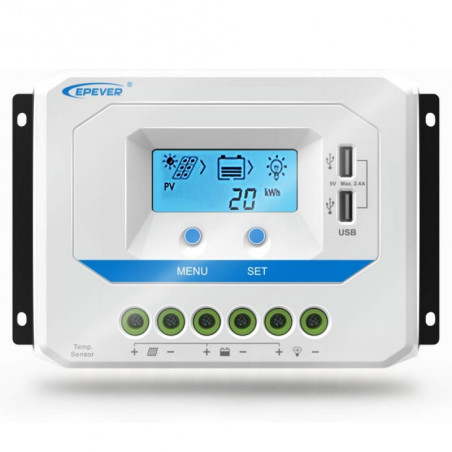


PWM charge controller 60A 12V 24V 36V 48V with display
60A PWM charge controller 12V 24V 36V 48V with 5V USB output, built-in LCD display, and dusk function.
Il VS6048AU è un regolatore di carica super affidabile dotato di display LCD integrato e prodotto dalla Epever, leader mondiale nel settore fotovoltaico. Questo regolatore permette all'utente di impostare la funzione crepuscolare per accensione automatica nelle ore di buio per lampadine 12V o 24V (a seconda della tensione di funzionamento dell'impianto) per un numero di ore impostabile dall'utente; anche per questo può essere ampiamente utilizzato in impianti fotovoltaici per illuminazione stradale, illuminazione domestica, illuminazione esterna e da giardino. Tramite le due porte USB da 5V, permette anche la ricarica diretta, senza l'utilizzo di inverter, di tablet, telefoni cellulari ecc. Ideale nel settore nautico in quanto permette la ricarica solare di batterie con tensione di 36V. Ottimo, infine, anche per impianti fotovoltaici offgrid in quanto è in grado di gestire una potenza fino a 3 kWp di fotovoltaico. PROTEZIONI ELETTRICHE - Protezione contro inversione di polarità da fotovoltaico e da batteria - Protezione sovratensione e sovraccarico e surriscaldamento delle batterie - Protezione da sovraccarico e corto circuito del carico - Protezione surriscaldamento del regolatore SPECIFICHE TECNICHE Tensione nominale: 12/24/36/48 V Tipo batterie accettate: piombo (sigillate,Gel,acido libero), Litio (LiFePo4/ LI(NiCoMn)O2), definita dall'utente Range voltaggio batteria: 9-64 V Corrente massima di carica: 60A@55°C Fusibile consigliato linea batteria: 80A 48V Massimo voltaggio ingresso PV (a circuito aperto): 96V Voltaggio lavoro MPPT: voltaggio batteria +2V - 108V Voltaggio di equalizzazione: batteria: sigillata: 14,6V, acido libero:14,8V Voltaggio di carica (boost): batteria: GEL: 14,4V, sigillata: 14,2V, acido libero: 14,6V Voltaggio di mantenimento (float): batteria GEL/sigillata/acido libero: 13,8V Distacco batteria bassa: 11,1V Ritorno da batteria bassa: 12,6V Autoconsumo: ≤ 9.2mA/12V - 1.7mA/24V - ≤14.5mA/36V - ≤17mA/48V Compensazione voltaggio in base a temperatura: solo acido libero -3mV/°C/2V Grado di protezione: IP30 Umidità di lavoro: 5-95 % Temperatura di lavoro: -25 +60 °C Comunicazione: RS485 connettore RJ45 Isolamento ingresso/uscita: negativo in comune Dimensioni: 21,4x12,9x7,2 cm Peso: 1,04kg Sezione cavo consigliata: 25mm2/4AWG