
Sunpower Gen 6 Monocrystalline Solar Cell 41x166mm Back Contact
Sunpower Gen 6 Monocrystalline Solar Cell with very high efficiency of 1.60 W, for the construction of solar panels, technological workshops, and training on photovoltaic energy.
SunPower Gen 6 Back-Contact Solar Cell — Laser Cut Quarter (41×166mm) | 1.60W, 24.5% Efficiency
The highest-efficiency back-contact solar cell available for DIY builds — precision laser-cut to quarter format. At 24.5% cell efficiency and just 4 grams, the SunPower Maxeon™ Gen 6 quarter cell (41×166mm) is the first choice for RC solar planes, drone builders, marine panel makers and anyone who needs maximum watts per gram.
Electrical Specifications
| Peak Power (Pmax) | 1.60 W |
| Operating Voltage (Vmp) | 0.6 V |
| Operating Current (Imp) | 2.7 A |
| Open Circuit Voltage (Voc) | 0.7 V |
| Short Circuit Current (Isc) | 3.3 A |
| Cell Efficiency | 24.5% |
| Cell Type | Monocrystalline SunPower Gen 6 Back-Contact |
| Contact Type | Back-Contact (no front metal strips) |
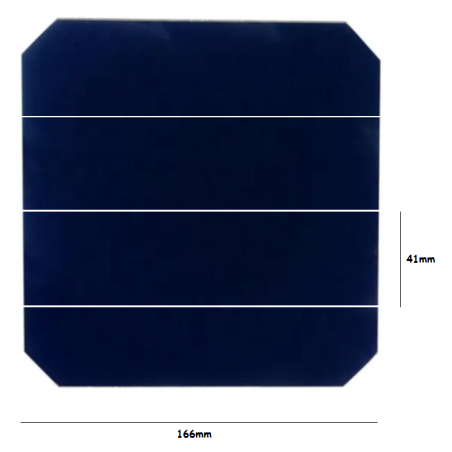
| Dimensions | 41 × 166 mm (1/4 laser cut) |
| Thickness | 150 ± 30 µm |
| Weight | 4 g |
What Makes SunPower Gen 6 Different?
Standard solar cells have metal contact strips running across the front surface. These strips block sunlight and corrode over time — the primary cause of long-term efficiency loss. SunPower Gen 6 solves this with a fundamentally different architecture:
- Back-Contact design: All electrical connections sit on the rear of the cell. The entire front face is active silicon — no shading, no corrosion risk, clean all-black appearance.
- Copper base substrate: Replaces the fragile silicon wafer of conventional cells. The copper foundation absorbs mechanical stress, preventing micro-cracks — the #1 cause of performance degradation in standard cells over time.
- 24.5% cell efficiency: Among the highest commercially available for small-format DIY solar applications. A conventional monocrystalline cell typically reaches 17–20%.
- Slight flexibility: The copper substrate allows moderate bending, making these cells suitable for gently curved surfaces — RC wings, boat coachroof panels, camper roof contours.
Why Laser-Cut to Quarter Format?
The full SunPower Gen 6 cell is 166×166mm. Precision laser-cutting to 41×166mm (1/4) gives you four practical advantages for DIY panel construction:
- Lower current, fewer resistive losses: At 2.7A operating current (vs ~10A for a full cell), ribbon connections carry far less current — meaning lower I²R losses and less heat in your solder joints.
- Narrow strip format: 41mm width slots perfectly into RC plane wing ribs, boat hatches, narrow camper roof sections and drone frames where a full square cell simply does not fit.
- Laser-clean edges: Laser cutting produces smooth, stress-free edges with no micro-cracks at the cut line — far superior to manual scribing and snapping.
- Easier to solder: A smaller, lighter cell is much easier to handle, align and tab — especially for back-contact soldering where precision matters.
Panel Voltage Configuration Guide
Each cell produces 0.7V open circuit (Voc) and 0.6V at operating point (Vmp). Wire cells in series to build your target voltage:
| Cells in Series | Panel Voltage (Vmp) | Panel Voltage (Voc) | Typical Application |
|---|---|---|---|
| 12 | ~7.2 V | ~8.4 V | Small off-grid sensors, garden lights |
| 20 | ~12 V | ~14 V | Nominal 12V systems, camper, boat |
| 30 | ~18 V | ~21 V | 12V battery charging via MPPT |
| 36 | ~21.6 V | ~25.2 V | 24V systems or micro-inverter input |
Note: cell dimensions may vary by ±1–2mm. Images are indicative — actual product may differ slightly in appearance.
Applications
RC Solar Planes and Drones
At just 4 grams per cell and 1.60W peak output, the power-to-weight ratio of these cells is exceptional. The 41mm strip format fits directly into standard RC wing rib spacing. The same SunPower Maxeon technology powers Solar Impulse — the first solar aircraft to circumnavigate the globe without fuel. If it is good enough to cross the Pacific, it is good enough for your build.
Marine Solar Panels
Curved hulls, cockpit coamings and coachroof panels all benefit from the slight flexibility of Gen 6 cells. When properly encapsulated with EVA film or marine-grade transparent silicone resin, these cells withstand salt spray, UV exposure and continuous vibration.
Camper Vans and Motorhomes
Roof profiles are rarely flat. Roof vents, skylights and antenna bases fragment the available surface. The quarter-cell strip format lets you tile around obstacles and follow roof contours while maintaining 24.5% efficiency on every usable centimetre.
Custom DIY Solar Panels
Need a non-standard voltage or a specific panel shape? The quarter-cell format gives you finer granularity in panel design than full cells. Combine with our other SunPower cell formats to hit exactly the voltage and current your project requires.
Education, Labs and Research
These cells are widely used in university laboratories, school STEM projects and research centres for photovoltaic experimentation. Building a panel from individual cells is the most hands-on way to understand how solar energy conversion actually works — and why these kits are popular in schools and makerspaces worldwide.
How to Build Your Panel — Step by Step
1. Plan Your Configuration
Decide your target voltage, calculate the number of cells in series from the table above, then lay out your cells on a flat surface before soldering. Back-contact cells have positive and negative pads on the rear — check polarity carefully before you start.
2. Soldering Back-Contact Cells
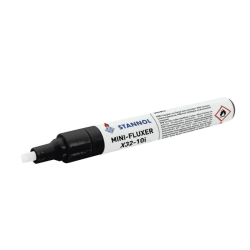
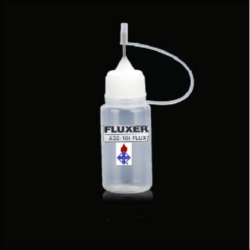
Use a temperature-controlled iron at 320–350°C, quality rosin flux and flat tabbing ribbon (1.5–2.0mm recommended). Work quickly to avoid overheating the cell junction. New to solar cell soldering? Our Learning Zone has step-by-step video guides specifically covering back-contact cell technique.
3. Encapsulation — Always Required
Never leave cells exposed to air and moisture. Recommended methods:
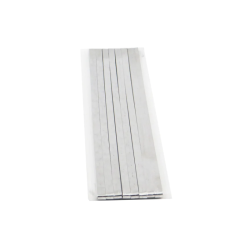
- EVA film lamination — professional standard, best long-term UV and moisture resistance.
- Two-part transparent silicone resin (e.g. QSIL 216) — ideal for irregular shapes and marine use.
- Double glass or polycarbonate sandwich — best for rigid flat panels and walkable surfaces.
4. Always Use a Charge Controller
Never connect a solar panel directly to a battery. Always use an MPPT charge controller — it maximises energy harvest from high-efficiency cells like the Gen 6 and protects batteries from overcharging. A PWM controller will work but will leave significant power on the table with SunPower cells.
Zero-Worry Guarantee
Every order includes approximately 5% extra cells free of charge as spares for soldering breakage or transport damage. If you have any issue with your delivery, contact us — 100% satisfaction is our commitment.
Frequently Asked Questions
What is the exact power output of this quarter cell?
1.60W peak power (Pmax) at STC. Operating voltage 0.6V (Vmp), operating current 2.7A (Imp). Open circuit voltage 0.7V (Voc), short circuit current 3.3A (Isc). Cell efficiency 24.5%.
Is this a genuine SunPower Maxeon Gen 6 cell?
Yes. These are authentic SunPower Maxeon™ Gen 6 monocrystalline back-contact cells, laser-cut from full 166×166mm wafers. The 24.5% efficiency is the factory-measured cell efficiency, not a marketing estimate.
How is laser cutting better than manual scribing?
Manual scribing and breaking creates micro-cracks along the cut edge that propagate over time under thermal cycling, reducing cell life. Laser cutting is a non-contact process — the edge is clean, smooth and stress-free, preserving the cell's structural integrity and long-term performance.
How many cells do I need for a 12V panel?
Approximately 20 cells in series gives you 12V Vmp (20 × 0.6V). For reliable MPPT charging of a 12V battery, 24–30 cells in series is recommended to maintain adequate voltage margin across all temperature and irradiance conditions.
Can I mix quarter cells with full or half cells in the same string?
Not in the same series string — mixing cell sizes creates current mismatch that limits output to the lowest Imp cell. Quarter cells (2.7A Imp) should be kept in their own series strings, separate from full (10A) or half cells (5A).
Are these cells suitable for marine use?
Yes, when properly encapsulated. The copper base is inherently more resistant to moisture ingress than standard silicon cells. With EVA lamination or marine-grade silicone resin, these cells perform reliably in salt-air environments.
What ribbon width should I use?
We recommend 1.5–2.0mm flat tabbing ribbon for back-contact Gen 6 quarter cells. The rear contact pads are narrower than standard front-contact tabs — use a fine-tip iron and apply flux generously. The Learning Zone has a pad placement diagram for back-contact cells.
Do you offer custom laser cutting to other sizes?
Yes — Mr Watt offers a custom solar cell laser cutting service. If you need a specific cell dimension for your project, contact us with your requirements and we will quote accordingly.